 +62 811-2577-878
 NEWSLETTER


Container Rain and
Its Causes
Risk in Shipping
Shipping cargo in containers is a practical and secure method, but it also introduces a pervasive threat: container rain. This phenomenon poses a significant risk of moisture damage to various types of cargo, regardless of the voyage or the nature of the goods being transported.
Conditions Leading to Container Rain
- Temperature Variations During Shipment: Fluctuating temperatures inside the container are hard to control and pose a substantial challenge, especially during long journeys.
- Excess Moisture: All containers contain inherent moisture, and none are entirely airtight. Moisture ingress and egress, known as 'container breathing', are common. Controlling excess moisture becomes pivotal in preventing container rain.
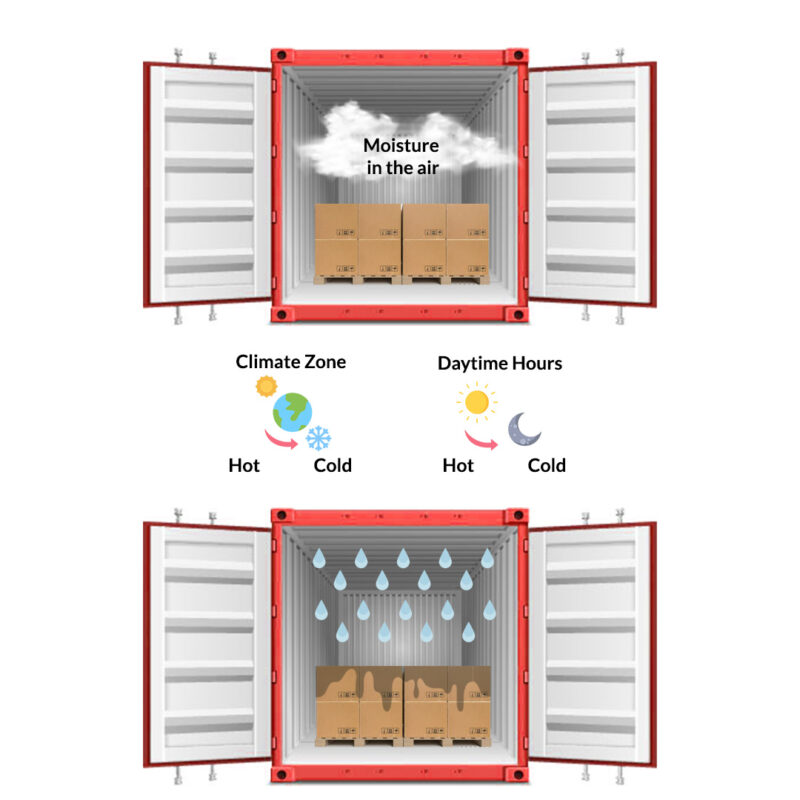
Understanding Condensation
Warm air holds more moisture than cold air. As temperatures drop, relative humidity increases, and if the air cools sufficiently, condensation occurs. The dew point, the temperature at which air becomes saturated with water vapor, plays a crucial role. When the air cools further, water vapor condenses into liquid, leading to dew formation. A temperature drop of 5° is often enough to cause problems. This often happens when day shifts to night and climate zone changes.
Container Rain: A Consequence of Condensation
Container rain manifests when condensation forms on the coolest surfaces within the container, typically the ceiling or walls. This condensed water can drip onto the cargo, causing substantial damage.
Crucial Container Conditions
Container Airtightness: The container must be in good condition, devoid of holes or damaged doors. Ensuring this is a minimum requirement before loading. Although no container is entirely airtight, a well-maintained container significantly slows down air and moisture exchange, reducing the risk of moisture ingress. For dry cargo, it's advisable to tape the ventilation holes.
Moisture Content Inspection: Containers, especially those washed before loading, might contain excess water. Pay attention to the container floor, as pallets and wooden dunnage can introduce additional moisture. Goods, especially organic or hygroscopic materials, may also contain moisture. Monitoring their moisture content is essential to assess the risk.
The Escalating Risk of Container Rain
During a voyage, temperature fluctuations inside the container are inevitable. As the container heats up during the day and cools down at night, air expands and contracts, leading to the phenomenon known as container breathing. This continuous exchange of air enhances the risk of, especially if excess moisture is present in the container or its contents.
In conclusion, comprehending the complexities of container rain is pivotal for shippers. By understanding the science behind it and carefully monitoring container conditions, businesses can mitigate the risks associated with moisture damage during shipping. Stay vigilant, adopt preventive measures, and safeguard your cargo.
Explore Our Moisture Protection Solutions Now!
Discover our advanced moisture protection solutions tailored to combat the challenges of container rain. Click here to explore our products and secure your cargo against the risks of condensation and moisture damage.